Coconut Cake

Coconut cake is a tropical dream wrapped in a soft, fluffy base, each bite bursting with the sweet richness of coconut. This cake stands out not only for its delightful flavor but also for its beautiful presentation, making it the perfect centerpiece for any celebration. The creamy frosting adorned with sweetened shredded coconut adds a touch of paradise to your dessert table, making every moment special.
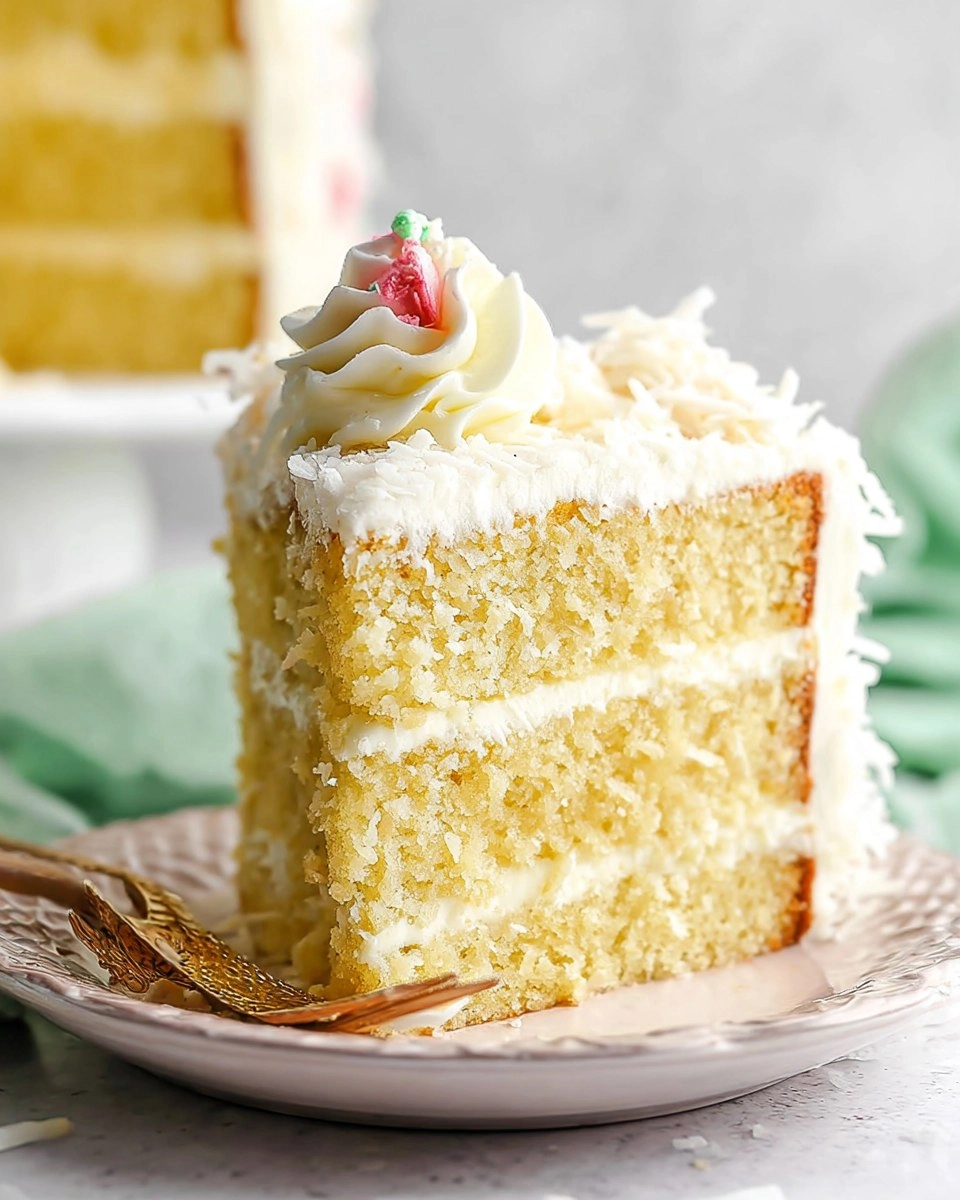
The first time I made this coconut cake, I was trying to recreate a memory of summer picnics and sunny beaches. I can still recall the first bite—a perfect balance of lightness and a rich, buttery flavor that evokes memories of carefree days by the shore. Trust me, this cake doesn’t just taste divine; it will warm your heart and fill your home with delightful aromas that beckon loved ones to gather around the table. Whether you’re looking to impress guests or simply treat yourself, you’ll find this recipe to be an absolute joy.
Table of Contents
Why You’ll Love This Recipe
- Simple & Quick: This coconut cake is straightforward and can be whipped up in about 75 minutes.
- Irresistible Flavor: The combination of coconut milk and extracts infuses each slice with a dreamy flavor that’s hard to resist.
- Eye-Catching Appeal: Frosted with velvety cream cheese frosting and crowned with coconut shavings, it’s beautiful enough to steal the show.
- Flexible Serving: Perfect for birthdays, weddings, or just a delightful afternoon snack.
- Diet-Friendly Options: Can be adapted for gluten-free baking without sacrificing flavor.
Ingredients You’ll Need
- 2 ½ cups (325g) all-purpose flour: The foundation of our cake, providing structure. For gluten-free options, consider using a gluten-free flour blend.
- 2 teaspoons baking powder: The leavening agent that gives the cake a light and airy texture.
- ¼ teaspoon baking soda: Helps enhance the rise and keeps the cake moist.
- ½ teaspoon salt: Balances the sweetness and enhances overall flavor.
- ½ cup (112g) unsalted butter (room temperature): Adds richness and moisture; make sure it’s soft for easy creaming.
- ½ cup (120ml) vegetable oil: Keeps the cake incredibly moist and tender. You could substitute with melted coconut oil for an extra coconut kick.
- 1 ½ cups (310g) sugar: Sweetens the batter and helps create that desirable texture.
- 2 teaspoons coconut extract: Deepens the coconut flavor, making it truly taste like paradise.
- ½ teaspoon vanilla extract: Adds complexity, harmonizing with the coconut notes.
- 4 large eggs: Essential for structure and moisture, room temperature eggs blend better for a silky batter.
- 1 ¼ cups (300ml) coconut milk (one 13.5 ounce can): The star ingredient that infuses the cake with creamy coconut flavor.
- 16 ounces (452g) cream cheese (room temperature): Forms the base of the lush frosting, providing a tangy richness.
- ¾ cup (168g) unsalted butter (room temperature): In the frosting, this adds flavor and creaminess.
- 8 cups (920g) powdered sugar: Sweetens our frosting and helps achieve a spreadable consistency.
- 2 teaspoons coconut extract: Echoes the flavor of the cake in the frosting, creating a cohesive taste.
- ½ teaspoon vanilla extract: For that additional layer of flavor.
- Pinch of salt: Balances the sweetness in the frosting.
- 1 ½ cups (113g) sweetened shredded coconut: Decorative flourish and texture that completes the cake.
How to Make Coconut Cake
- Prepare the Cake Pans: Grease three 8-inch cake pans and place parchment paper circles in the bottoms. Preheat your oven to 350°F (176°C).
- Mix Dry Ingredients: In a medium bowl, whisk together 2 ½ cups (325g) of all-purpose flour, 2 teaspoons of baking powder, ¼ teaspoon of baking soda, and ½ teaspoon of salt. Set aside.
- Cream the Butter and Sugar: In a large mixer bowl, combine ½ cup (112g) unsalted butter, ½ cup (120ml) vegetable oil, 1 ½ cups (310g) sugar, 2 teaspoons coconut extract, and ½ teaspoon vanilla extract. Beat until light in color and fluffy, about 3-4 minutes.
- Add Eggs: Add the eggs one at a time, mixing until just combined after each addition. Scrape down the sides of the bowl to ensure everything is mixed well.
- Incorporate Dry Ingredients: Gradually add half the dry ingredients to the batter and mix until just combined.
- Add Coconut Milk: Incorporate 1 ¼ cups (300ml) coconut milk into the batter, mixing until combined. It’s okay if the batter appears slightly curdled.
- Finish the Batter: Add the remaining dry ingredients and mix until smooth. Be careful not to overmix.
- Bake: Divide the batter evenly among the prepared cake pans. Bake for 20-25 minutes, or until a toothpick inserted in the center comes out with a few crumbs attached.
- Cool the Cakes: Remove the cakes from the oven and let them cool for about 2-3 minutes before transferring them to cooling racks to cool completely.
- Prepare the Frosting: In a large bowl, combine 16 ounces (452g) of cream cheese and ¾ cup (168g) of unsalted butter. Beat until smooth.
- Add Powdered Sugar: Gradually add about half of the 8 cups (920g) powdered sugar and mix until well combined.
- Flavor the Frosting: Blend in 2 teaspoons of coconut extract, ½ teaspoon of vanilla extract, and a pinch of salt.
- Smooth the Frosting: Add the remaining powdered sugar, mixing until the frosting is smooth and fluffy. Adjust the consistency by adding more sugar if necessary.
- Trim the Cakes: If the cakes have domed tops, use a large serrated knife to level them off for even stacking.
- Assemble the Cake: Place the first layer on a serving plate and spread about 1 cup of frosting evenly on top. Add the second layer and another cup of frosting.
- Frost the Outer Layer: Top with the final layer and frost the sides and top of the cake. For tips on achieving a smooth finish, check out a frosting tutorial.
- Decorate with Coconut: Press shredded coconut onto the sides of the cake immediately after frosting. This helps it stick better.
- Finish the Top: Pipe swirls of frosting on the top and fill in the center with shredded coconut. This gives it a beautiful finishing touch.
- Store: Cover your masterpiece in an airtight container and refrigerate to enjoy later. Serve at room temperature for the best flavor.
Storing & Reheating
To keep your coconut cake fresh, store it well-covered at room temperature for up to two days. For longer storage, keep it in an airtight container in the fridge for up to four days. You can also freeze it for up to three months—just wrap it tightly in plastic wrap and aluminum foil. When ready to enjoy, simply thaw at room temperature for a few hours. While the flavors remain delicious, the texture may soften, so serve it slightly cool for the best experience.
Chef’s Helpful Tips
- Ensure your eggs and butter are at room temperature for better mixing and fluffiness.
- Don’t skimp on the creaming time; it helps incorporate air for a lighter cake.
- Avoid overmixing—stop as soon as the ingredients are combined to maintain tenderness.
- For deeper coconut flavor, consider toasting your shredded coconut before decorating.
- Frost and serve your cake within a few days for optimal taste; freshness is key!
Coconut cake is not just a recipe; it’s an experience waiting to be had. From the delightful preparation to the first slice, there’s a little magic in every moment. Don’t hesitate to make this cake your own—try different garnishes or add a fruity twist by serving it with a side of tropical fruit. The possibilities are endless, and the joy it brings is priceless. Enjoy the process, and more importantly, enjoy every crumb!

Recipe FAQs
How do I make my coconut cake more flavorful?
Can I make this cake ahead of time?
What can I substitute for cream cheese in frosting?
How should I store leftover coconut cake?
⭐ If you make my Coconut Cake recipe, Awesome! I would love to hear from you. Please give it a star rating and review below! 👇

Coconut Cake
This Coconut Cake features a moist and flavorful blend of coconut milk and shredded coconut, making it a delightful treat for any occasion. Perfect for dessert lovers, it’s simple to prepare and a guaranteed crowd-pleaser!
- Prep Time 75 minutes
- Cook Time NO DATA
- Yield 12 servings 1x
Ingredients
- 2 ½ cups (325g) all-purpose flour
- 2 teaspoons baking powder
- ¼ teaspoon baking soda
- ½ teaspoon salt
- ½ cup (112g) unsalted butter (room temperature)
- ½ cup (120ml) vegetable oil
- 1 ½ cups (310g) sugar
- 2 teaspoons coconut extract
- ½ teaspoon vanilla extract
- 4 large eggs
- 1 ¼ cups (300ml) coconut milk (one 13.5 ounce can)
- 16 ounces (452g) cream cheese (room temperature)
- ¾ cup (168g) unsalted butter (room temperature)
- 8 cups (920g) powdered sugar
- 2 teaspoons coconut extract
- ½ teaspoon vanilla extract
- Pinch of salt
- 1 ½ cups (113g) sweetened shredded coconut
Instructions
- Prepare three 8-inch cake pans with parchment paper circles in the bottom and grease the sides.
- Preheat the oven to 350°F (176°C).
- In a medium bowl, combine the flour, baking powder, baking soda, and salt; set aside.
- In a large mixer bowl, beat together the butter, oil, sugar, and extracts until light and fluffy, about 3-4 minutes.
- Add the eggs one at a time, mixing until mostly combined after each. Scrape down the sides as needed.
- Add half of the dry ingredients to the batter and mix until mostly combined.
- Pour in the coconut milk and mix until well combined; the batter may appear slightly curdled—that's normal.
- Mix in the remaining dry ingredients until smooth, scraping down the sides as needed. Avoid overmixing.
- Divide the batter evenly among the prepared cake pans and bake for 20-25 minutes, or until a toothpick inserted comes out with a few crumbs.
- Cool the cakes in the pans for about 2-3 minutes before transferring to cooling racks to cool completely.
Notes
Ensure all ingredients are at room temperature for better mixing.
The cake can be frosted with cream cheese icing for added flavor.
Store leftovers in an airtight container in the refrigerator.
Nutrition
- Serving Size: 1 slice
- Calories: 410
- Sugar: 40g
- Sodium: 210mg
- Fat: 18g
- Saturated Fat: 9g
- Unsaturated Fat: 7g
- Trans Fat: 0g
- Carbohydrates: 60g
- Fiber: 1g
- Protein: 4g
- Cholesterol: 80mg
Nutritional information is an estimate. The nutritional values for your final dish may vary based on measuring differences and products used.